
Do you need a license to be a makeup artist (2026)?
Introduction
It depends on your state, and on where and how you work. Of the 50 states and DC, 32 states and DC require a cosmetology or esthetics license to do makeup for pay, 13 states don't license makeup-only work, 3 have a makeup-specific permit or registration, and 2 depend on where you work. Even where a license is required, most states exempt some work: film, TV and theater productions, cosmetics counters and demonstrations, and sometimes photo shoots. Rules change, so confirm with your state board before you charge for makeup.
The short answer
No license needed for makeup on its own: Arizona, Colorado (since August 12, 2026), Florida, Idaho (since July 1, 2025), Massachusetts, Minnesota (a 4-hour safety course is required), Mississippi, Nebraska, Texas, Utah, Virginia, Washington and Wyoming.
A cosmetology or esthetics license needed to do makeup for pay: most other states, usually with exemptions for productions or retail.
A makeup-specific permit or registration: Kentucky, Ohio and Oklahoma.
It depends on the setting: Nevada (registration only if you work inside a licensed salon) and Vermont (retail, in-home and theater work are exempt).

Types of Makeup Artist Licenses
Three kinds of credential get called "licenses" in this industry: a school certificate, a state license and, in a few states, a makeup permit. Only the license and the permit come from your state.
Certified Makeup Artist
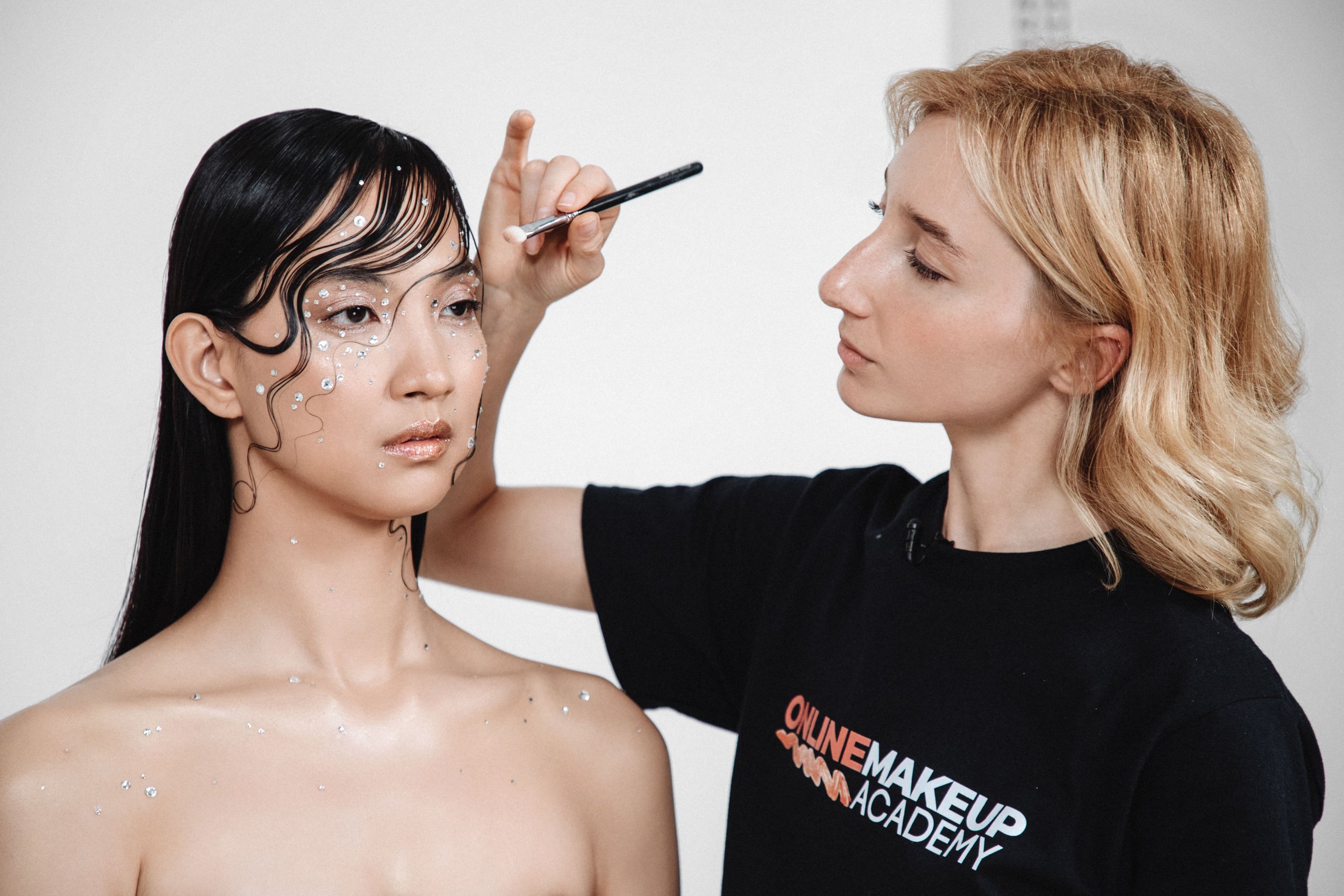
A certified makeup artist will specialize in makeup application. By taking a course from a makeup school (online or in person), you can learn to apply makeup professionally to others, and after completing the course curriculum, receive a certificate of completion that recognizes you as a Certified Makeup Artist, with a mastery in professional makeup application. Specifically, through our Makeup Artist course at Online Makeup Academy, we offer an educational makeup program that is taught by professional New York based makeup artists that have a wealth of knowledge and experience in the celebrity, editorial, and private client freelance based areas of the Makeup Artist industry.
As a result, we can offer a unique one-on-one opportunity to guide you through your makeup artistry education in a strictly online environment (so you don’t have to travel beyond the comfort of your own location [to New York, for example] to receive top tier professional industry experience and teaching). We bring this one-of-a-kind opportunity online and directly to you! If you prefer in person schooling, you can visit our sister based New York location, or find a makeup school near you in your state to apply to learn makeup artistry and become a Certified Makeup Artist.
A certificate is not a license. A certificate shows clients and employers that you completed professional training, and in states that don't license makeup-only work it's the credential that matters most. It doesn't replace a state license where one is required. Our Elite Career Path adds advanced technique and business training for artists who want both the skills and the business side.
Cosmetology License

A cosmetology license covers hair, skin, nails and makeup. You earn it by completing a state-approved program, from 1,000 hours (New York, California, Texas) to 1,800 (Hawaii, Nebraska, West Virginia), and passing your state's exam.
Most of the training is hair. Compare cosmetology schools and how long cosmetology school takes.
Esthetician License

An esthetician (or aesthetician, or skin care specialist) license covers skincare and, in most states, makeup. Programs are shorter than cosmetology, generally 300 to 1,000 hours (600 in many states), depending on the state.
Like cosmetology, they need in-person training hours, so they can't be earned fully online. In states that require a license for paid makeup, esthetics is usually the shortest route.
Makeup permits and registrations
Three states created a lighter credential for makeup-only work. Kentucky's Makeup Artistry Permit needs a 3-hour infection-control course, and permit holders must always work in a licensed facility. Ohio's boutique services registration covers makeup artistry with no training hours. Oklahoma's Makeup Artist certificate, available since November 1, 2024, needs 8 hours of safety and sanitation instruction. Nevada is close to this group: makeup artistry isn't cosmetology there, but makeup artists who work inside a licensed salon register with the state board.
When is a license required?
Where you work matters as much as what you do:
In a salon or spa: most states require a licensed professional, and many require the work to happen in a licensed shop.
Freelance bridal and events: depends on the state. In states that license makeup, freelance paid makeup usually needs a license too, and some limit where licensees may work outside a shop.
Film, TV, theater and photo shoots: many states exempt makeup for productions, often only when you're employed or contracted by the production.
Cosmetics counters and demonstrations: most states exempt applying makeup to sell products, especially when it's free.
Lashes and permanent makeup: separate rules. Lash extensions often need a license even where makeup doesn't (Texas, for example), and permanent makeup is usually regulated as tattooing by the state or local health department.

Licensing Requirements
The table below shows each state's rule for makeup-only work done for pay, the license that covers makeup if one is needed, the main exemptions, and the state board to check with. Checked October 26, 2026 against state law and board pages. Laws change: confirm with your board, and ask about the specific work you plan to do.
By State
| State | Makeup-only work for pay | License that covers makeup (training hours) | Main exemptions | Check with |
|---|---|---|---|---|
| Alabama | License required | Esthetician (1,000) or cosmetologist (1,500) | Retail cosmetics counters; occasional unpaid work. No exemption for theater or film. | Board of Cosmetology and Barbering |
| Alaska | License required | Esthetician (350) or hairdresser (1,650) | Communities under 1,000 people. No exemption for theater, film or retail. | Board of Barbers and Hairdressers |
| Arizona | No license for makeup-only work | None; aesthetician (600) for skin care or tinting | Makeup application is exempt (a notice must be posted); theatrical groups; product sellers. | Barbering and Cosmetology Board |
| Arkansas | License required | Aesthetician (600 under the rules; the statute says 480) or cosmetologist | Production employees; demonstrating or selling cosmetics. | Department of Health, Cosmetology |
| California | License required | Esthetician (600) or cosmetologist (1,000) | Employees of theater, radio, TV and film productions; one-time unpaid product demos; unpaid work. | Board of Barbering and Cosmetology |
| Colorado | No license for makeup-only work (since August 12, 2026) | None; esthetician (600) for skin care, waxing and lashes | Makeup application; productions; product demos. | Office of Barber and Cosmetology Licensure |
| Connecticut | License required | Esthetician (600) | Makeup at a rented shopping-center kiosk; unpaid supervised trade-show work. No exemption for theater. | Department of Public Health |
| Delaware | License required | Aesthetician (600) or cosmetologist (1,500) | Production, modeling or photography employees; unpaid retail demos. | Board of Cosmetology and Barbering |
| District of Columbia | License required | Esthetician (600) or cosmetologist (1,250) | None found for makeup. | Board of Barber and Cosmetology |
| Florida | No license for makeup-only work | None | Makeup application; productions; theme parks; retail; photo studios. | Board of Cosmetology |
| Georgia | License required (confirm with the board) | Esthetician (1,000) or cosmetologist (1,500) | Film, TV and music productions; retail counters. | State Board of Cosmetology and Barbers |
| Hawaii | License required | Esthetician (600) or cosmetologist (1,800) | None found for makeup. | Board of Barbering and Cosmetology |
| Idaho | No license for makeup-only work (since July 1, 2025) | None; esthetician (600) for skin care | Makeup artistry; productions; retail. | Barber and Cosmetology Services Licensing Board |
| Illinois | License required | Esthetician (750) | Film, TV and stage actors; cosmetics sellers demonstrating products. | Department of Financial and Professional Regulation |
| Indiana | License required | Esthetician (700) | Makeup applied as part of selling cosmetics; unpaid work. | State Board of Cosmetology and Barber Examiners |
| Iowa | License required | Esthetician (600) | Makeup samples to demonstrate products; casual unpaid work; family. | Department of Inspections, Appeals and Licensing |
| Kansas | License required | Esthetician (1,000) | None in the statute; free application while selling cosmetics has been held not to be cosmetology. | Board of Cosmetology |
| Kentucky | Makeup permit or registration | Makeup Artistry Permit (3-hour infection-control course); esthetician (750) | Unpaid application; face painting at carnivals or fairs. Permit holders must work in a licensed facility. | Board of Cosmetology |
| Louisiana | License required | Esthetician (750); the makeup permit was repealed in 2018 | None for makeup. | State law (board site unavailable) |
| Maine | License required | Aesthetician (600) | Special makeup for theater, film, TV or modeling; retail store sales. | Barbering and Cosmetology Licensing |
| Maryland | License required | Limited esthetician (600) | None found. | State Board of Cosmetologists |
| Massachusetts | No license for makeup-only work | None; aesthetician (600) for skin care | Makeup artistry is excluded from cosmetology. | Board of Registration of Cosmetology and Barbering |
| Michigan | License required | Esthetician (750 for trainees since July 1, 2024; 400 before) | Salespeople demonstrating products on a customer. | Cosmetology licensing (LARA) |
| Minnesota | No license for makeup-only work (a 4-hour course is required) | None, but a 4-hour health, safety and law course is required; esthetician (600) for facials | Hairstyling and makeup, with the course. | Board of Cosmetologist Examiners |
| Mississippi | No license for makeup-only work | None | Makeup artistry, threading and lash extensions (up to three combined). | State law (board site unavailable) |
| Missouri | License required | Esthetician (750) | Retail cosmetic sales, with conditions; free services to family or friends. | Board of Cosmetology and Barber Examiners |
| Montana | License required | Esthetician (650) or cosmetologist (1,500) | Theater, TV and film productions, if employed or contracted by the production. | Board of Barbers and Cosmetologists |
| Nebraska | No license for makeup-only work | None | Applying cosmetics; theater; retail. | Cosmetology and Esthetics licensing (DHHS) |
| Nevada | Depends on the setting | Makeup artist registration (no hours, up to $25 a year) only when working inside a licensed salon; esthetician (600) | Freelancers outside salons don't register; free retail demos. | State Board of Cosmetology |
| New Hampshire | License required | Esthetician (600) or cosmetologist (1,200) | Free manufacturer demos; homebound clients. No exemption for productions or weddings. | Board of Barbering, Cosmetology and Esthetics |
| New Jersey | License required | Skin care specialist (600), beautician (1,100) or cosmetologist-hairstylist (1,200) | Employees of theater, radio, TV, film, modeling or photography businesses; free retail demos. | Board of Cosmetology and Hairstyling |
| New Mexico | License required | Esthetician (600) or cosmetologist (1,600) | Makeup artists employed by theater or film productions (since 2025). | Board of Barbers and Cosmetologists |
| New York | License required | Esthetics (600, including 70 hours of makeup) or cosmetology (1,000) | Free trial application to sell products; unpaid help at home. No production exemption. | Department of State, Esthetics |
| North Carolina | License required | Esthetician (600) or cosmetologist (1,500) | None relevant. | Board of Cosmetic Art Examiners |
| North Dakota | License required | Esthetician (600, including 65 hours of makeup) or cosmetologist (1,500) | Retail demos with disposable applicators. | State Board of Cosmetology |
| Ohio | Makeup permit or registration | Boutique services registration (no hours); esthetician (600) or cosmetologist (1,500) | Retail trial demos; glamour photography at licensed salons. | State Cosmetology and Barber Board |
| Oklahoma | Makeup permit or registration | Makeup Artist certificate (8 hours of safety and sanitation); facial operator or cosmetologist | Employees of theater, radio, TV, film, modeling or photography businesses; sealed-package retail sales. | State Board of Cosmetology and Barbering |
| Oregon | License required | Esthetics certificate (444 hours, plus 40 hours of laws, rules and career development) | Film, video and theater performance prep; professional photographs; merchant demos. | Board of Cosmetology |
| Pennsylvania | License required | Esthetician (300) or cosmetologist (1,250) | None for theater, film, photo, retail or weddings. | State Board of Cosmetology |
| Rhode Island | License required | Esthetician (600) or hairdresser and cosmetician (1,000) | None for makeup. | Department of Health |
| South Carolina | License required | Esthetician (450) or cosmetologist (1,500) | Manufacturer reps and salespeople demonstrating products. | Board of Cosmetology |
| South Dakota | License required | Esthetician (600) or cosmetologist (1,500) | Medical professionals, barbers and licensed demonstrators. | Cosmetology Commission |
| Tennessee | License required | Aesthetician (750) or cosmetologist | Free retail cosmetics demos; free services at home. | Board of Cosmetology and Barber Examiners |
| Texas | No license for makeup-only work | None; esthetician (750) or operator (1,000) only for other services, such as lash extensions | Makeup-only work; incidental services for photo studios, TV and film. | TDLR |
| Utah | No license for makeup-only work | None (makeup isn't a licensed practice) | Product demos; film crews up to 120 days; unpaid work. | Division of Professional Licensing, Cosmetology |
| Vermont | Depends on the setting | Esthetician (500) or cosmetologist (1,000) | Cosmetics applied in retail stores or customers' homes; theater and performing arts. | Office of Professional Regulation |
| Virginia | No license for makeup-only work | None (esthetics includes makeup, but makeup-only work is exempt) | Makeup-only work; unpaid services. | Board for Barbers and Cosmetology |
| Washington | No license for makeup-only work | None; esthetician (750) for skin care | Makeup isn't a licensed practice. | Department of Licensing, Cosmetology |
| West Virginia | License required | Aesthetician (600) or cosmetologist (1,800) | None found. | Board of Barbers and Cosmetologists |
| Wisconsin | License required | Aesthetician (450) or cosmetologist (1,550) | Live performances; film, video and photo productions for public release; product demos. | Cosmetology Examining Board (DSPS) |
| Wyoming | No license for makeup-only work | None for facial makeup | Facial makeup only; cosmetics sales demos. | Board of Cosmetology |
Questions? Email info@onlinemakeupacademy.com. We update this page as rules change.
Doing hair too?
Hair is regulated more widely than makeup. Cutting, coloring and chemical services for pay require a cosmetology or barber license in every state, and many states also license styling. A few states have narrower licenses or exemptions for styling, braiding or blowouts. If you plan to offer bridal hair, check your state board before you charge. OMA's Pro Hairstyling Program teaches the skills; your state decides whether you need a license to sell them.
International
Similar requirements will apply to international certification as those listed above, it is dependent upon your own individual location. Traditionally you will not need a license to professionally apply makeup as a Makeup Artist. At Online Makeup Academy, we are internationally recognized, issuing certifications worldwide, with students from all corners of the world, looking to learn how to apply makeup professionally and become a Certified Makeup Artist to begin their successful career in the beauty industry!
Union Membership
Union membership opens union film, TV and theater work, though many productions hire non-union artists. On the West Coast, IATSE Local 706 (Los Angeles) admits makeup artists through its Industry Experience Roster: for example, 60 paid days a year on non-union productions in Los Angeles County for three of the last five years, or 60 days on one union project with a producer's waiver. Off-roster routes for daytime network TV and theater take 30 days within a year. Makeup artists also pass a color blindness test. See How to join Local 706 for current requirements. On the East Coast, see IATSE Local 798.
Conclusion
Whether you need a license comes down to three things: your state, where you'll work, and whether you'll be paid. Check your state above, confirm the details with your board, and build your skills either way: clients book the artist whose work they trust. See OMA's programs and tuition.
Frequently asked questions
Do you need a license to do makeup?
It depends on your state. Most states require a cosmetology or esthetics license to do makeup for pay, usually with exemptions for film, TV, theater or retail work. Thirteen states, including Texas and Florida, don't license makeup-only work, and Kentucky, Ohio and Oklahoma have a makeup-specific permit or registration.
Do you need a license to do bridal makeup?
In states that license makeup, paid bridal makeup usually needs a cosmetology or esthetics license, and some states limit where licensees can work outside a salon. In states that don't license makeup-only work, you don't need one. Check your state above.
Do you need a license to be a freelance makeup artist?
Same rule: it depends on the state. Freelancing doesn't exempt you where makeup is licensed, though many states exempt film, TV, theater and retail work.
Do you need a license to do makeup in Texas?
No. Texas law exempts people who do makeup applications only (Texas Occupations Code 1603.0013), and the state licensing agency, TDLR, says makeup application is not regulated. Eyelash extensions do need a TDLR license.
Is a makeup certificate the same as a license?
No. A certificate comes from the school that trained you; a license comes from your state after state-approved training and an exam.
Which license covers makeup?
Usually an esthetician (skin care) license, the shorter option, or a full cosmetology license. A few states have makeup-specific permits or registrations.
By Nina Mua, Founder of Online Makeup Academy | Last updated: October 27, 2026