
Makeup Artist Impostor Syndrome: Why You Feel Like a Fraud
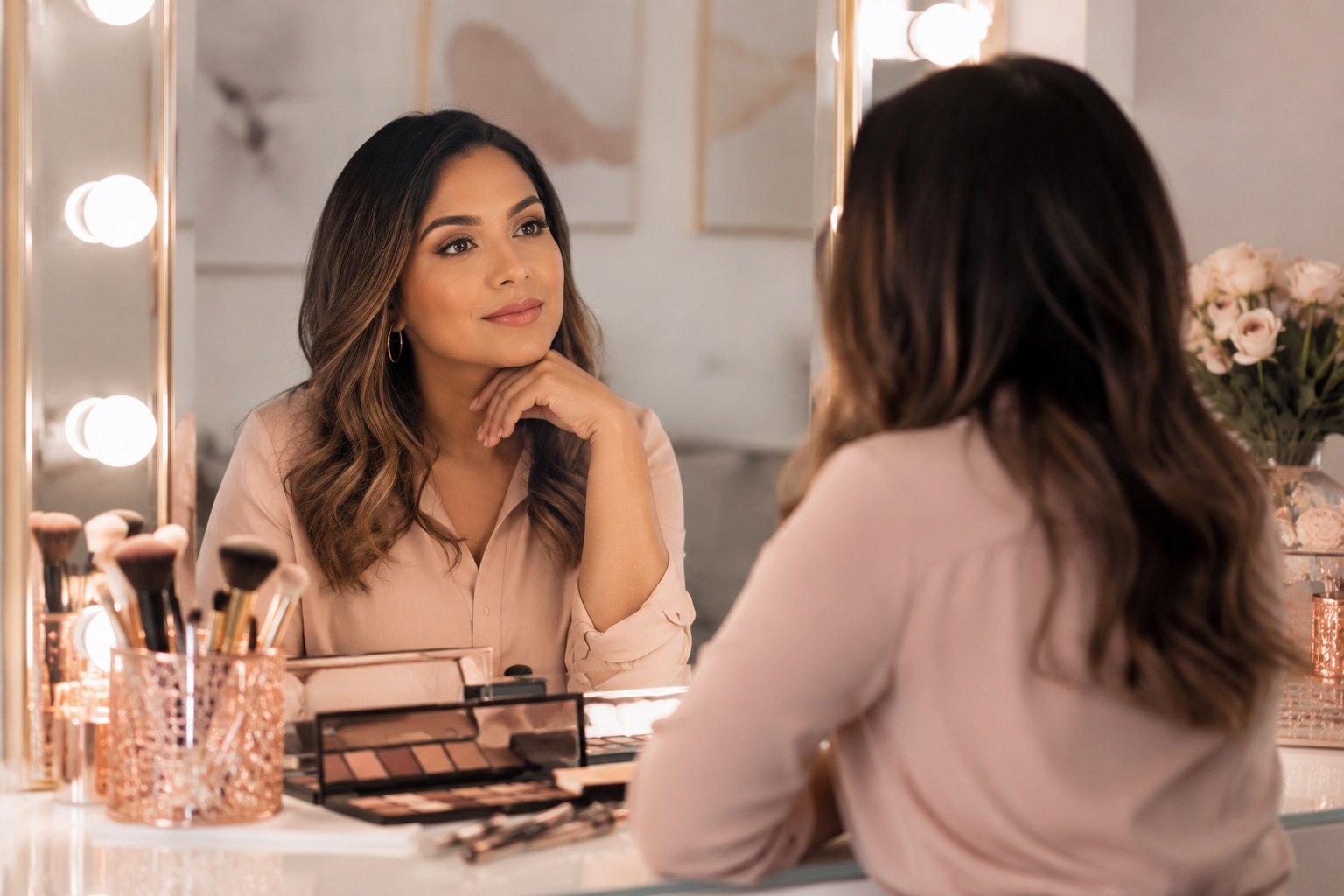
Impostor syndrome is the persistent feeling that you are a fraud who will be exposed at any moment, despite real evidence of your skill, and it is extremely common among makeup artists. If you have ever finished a flawless bridal look and still thought "I just got lucky," brushed off a compliment, or felt afraid to call yourself a makeup artist out loud, you are not a fraud. You are experiencing something that affects most high achievers, and it is manageable.
Impostor syndrome was first identified in the 1970s among high-achieving women, and research suggests around 70 percent of people feel it at some point. Creatives get hit especially hard, and makeup artists sit right in the danger zone. Your work is public, it is judged by subjective and constantly shifting beauty standards, and many artists are self-taught rather than classically trained. As impostor syndrome expert Dr. Valerie Young has noted, the feeling tends to be even stronger when you did not come up through a formal program. The good news is that once you understand the pattern, you can stop it from running your career.
In this guide, you'll learn:
The specific signs of impostor syndrome in makeup artists, and how it quietly costs you money
Why self-taught and newer artists are the most vulnerable to it
A step-by-step way to quiet the fraud voice and build real confidence
The mindset shifts that keep it from creeping back in
What Is Impostor Syndrome, and Why Do Makeup Artists Get It?
Impostor syndrome is a psychological pattern where you doubt your own accomplishments and live with a nagging fear of being exposed as a fake, even when there is clear proof you are skilled. It is not a mental illness or a formal diagnosis, but it is a widely recognized phenomenon, first described by psychologists Pauline Clance and Suzanne Imes in 1978. In short, it is a gap between how capable you actually are and how capable you feel.
Makeup artists are unusually exposed to it for a few reasons. Your work is highly public and permanent, captured in photos and posted for the world to judge. Beauty is subjective, so there is no clean scorecard telling you that you are good, which leaves plenty of room for doubt. Social media serves up the most polished artists in the world every time you open an app. And a large share of makeup artists are self-taught, which can create a quiet feeling that "real" artists went to school and you are somehow faking the title.
Impostor syndrome versus normal self-doubt
A little self-doubt is healthy and keeps you improving. Impostor syndrome is different. It is a persistent disconnect between your actual competence and how you feel about it. You can have a full portfolio, happy clients, and paid bookings, and still feel like you are fooling everyone. That gap between the evidence and the feeling is the tell.
What Are the Signs of Impostor Syndrome in Makeup Artists?
The signs are often disguised as humility or perfectionism, which is exactly why they are easy to miss. Watch for these patterns:
Undercharging. You keep your rates low or refuse to raise them because you do not feel "good enough" to charge more.
Turning down opportunities. You pass on bookings, collaborations, or editorial work that feels above your level, even when you are capable.
Never finishing your portfolio. You endlessly re-edit photos or delay posting because the work is "not ready yet."
Crediting luck instead of skill. You chalk up your best results to good lighting, the client's features, or timing, rather than your own ability.
Avoiding the title. You feel like a fraud when someone introduces you as "a makeup artist," or you dodge the label entirely.
Spiraling after scrolling. A few minutes on Instagram leaves you convinced every other artist is more talented than you.
Left unchecked, impostor syndrome is expensive. It keeps your rates low, shrinks the opportunities you say yes to, and can stall a career that is objectively going well. The undercharging piece is especially costly, because the price you set quietly signals your value to every client who sees it, and a number rooted in self-doubt teaches people to see you as less than you are. If impostor feelings have kept your rates stuck, our guide on securing your client network walks through how to price, package, and present yourself so your income finally reflects your real skill. Naming the pattern is the first step to stopping it from quietly making decisions on your behalf.

Why Are Self-Taught Makeup Artists Especially Prone to It?
Self-taught and newer artists tend to carry an extra layer of impostor syndrome, because they often believe a "real" makeup artist must have formal credentials they do not have. A few forces stack up here.
The credential gap. Without a diploma or certificate, many artists feel they are faking a title others earned. This lines up with what Dr. Valerie Young has observed, that the fraud feeling intensifies when you are not classically trained.
The comparison trap. Social media constantly surfaces the top tier of artists, so your everyday work always looks lacking next to a curated highlight reel. You are comparing your real, unfiltered process to someone else's best possible frame. Learning to pull genuine inspiration from other artists without tipping into comparison is its own skill, and our guide on the best ways to get inspired as a makeup artist shows how to keep the fuel and drop the self-judgment.
The subjectivity problem. Because beauty is subjective, there is no objective test that stamps you "qualified." That missing scorecard leaves a vacuum, and doubt rushes in to fill it.
The demographic overlap. Impostor syndrome was first documented in high-achieving women, and the beauty industry is majority women. The exact group most studied for impostorism overlaps heavily with the people doing makeup for a living.
Here is the reframe that helps most. Confidence is not something you are born with, it is evidence you accumulate. Structured training, a certificate, and a portfolio of real work give your brain the proof it keeps demanding. That is a big reason many self-taught artists eventually pursue formal professional makeup training, not because they lack talent, but because credible evidence is what finally quiets the fraud voice.
How Do You Overcome Impostor Syndrome as a Makeup Artist?
You beat impostor syndrome by collecting evidence, changing how you talk to yourself, and taking action before you feel ready. Here is a step-by-step approach.
Name it out loud. Recognize the feeling as impostor syndrome rather than truth. Simply knowing that most high achievers feel this way strips it of a lot of its power.
Keep an evidence file. Start a folder of wins: happy client texts, before-and-after photos, paid bookings, kind comments, follower growth. When the fraud voice starts talking, read the file. Facts beat feelings.
Separate humility from self-sabotage. Accept compliments with a simple "thank you" instead of deflecting them. Every time you credit luck instead of skill, you reinforce the very lie you are trying to escape.
Reframe failure as data. A look that did not land or a booking that fell through is information, not proof that you are a fraud. Ask what to adjust next time, then move on. Growth always requires imperfect attempts.
Curate your inputs. Stop doomscrolling the top one percent of artists. Follow accounts that teach and encourage, mute the ones that make you spiral, and remember you are comparing your behind-the-scenes to their highlight reel.
Act before you feel ready. Take the booking, post the work, quote the higher rate, and call yourself a makeup artist. Confidence follows action, not the other way around. You will never feel 100 percent ready, and you do not need to.
Build real evidence through training. If the doubt is rooted in "I never learned this properly," formal education is the direct fix. A structured program and a certificate give you both the skills and the proof that settle the argument for good.
One note before you go further: this article is educational and not a substitute for professional medical or mental health advice. Impostor syndrome can overlap with anxiety and depression. If your self-doubt is persistent, overwhelming, or affecting your daily life, please reach out to a licensed mental health professional.
What Are the Biggest Mistakes Makeup Artists Make With Impostor Syndrome?
The most damaging mistakes come from believing the fraud voice and building your career around it. Avoid these.
Waiting to feel "qualified" before starting. Nobody hands you certainty. Artists who wait to feel ready never begin, while those who start build confidence along the way.
Undercharging to feel safe. Low prices do not make you more legitimate, they just make you poorer and more resentful. Your rates should reflect your value, not your fear.
Hiding your work. Refusing to post until it is "perfect" keeps you invisible and starves you of the feedback and bookings that actually build confidence.
Comparing your start to someone else's middle. The artist you envy online had their own shaky beginning. You are seeing their edited highlight reel, not their real timeline.
Treating self-doubt as proof. Feeling like a fraud is a feeling, not evidence. Your portfolio, your clients, and your results are the evidence, and they usually tell a very different story.
Suffering in silence. Assuming you are the only one who feels this way keeps you stuck. Almost every artist you admire has felt exactly the same at some point.
How Online Makeup Academy Helps You Build Real Confidence
Impostor syndrome thrives on doubt, and the cure for doubt is evidence. That is exactly what structured training gives you. At Online Makeup Academy, you learn professional techniques step by step, receive personalized video feedback from working artists, build a real portfolio, and earn a recognized certificate, so your confidence rests on proof instead of guesswork. Many of our students arrive self-taught and unsure whether they can even call themselves makeup artists. They leave with the skills, the portfolio, and the credential that finally make the title feel earned.
If your self-doubt comes from never having learned the craft formally, explore our Master Makeup program or the comprehensive Elite Career Path, where personalized feedback and a professional portfolio give you evidence the fraud voice cannot argue with. And because self-doubt and overwork often travel together, it is worth reading our guide on avoiding makeup artist burnout alongside this one.

Frequently Asked Questions About Makeup Artist Impostor Syndrome
What is impostor syndrome in makeup artists?
Impostor syndrome in makeup artists is the persistent feeling of being a fraud who will be exposed, despite real skill and success. It shows up as undercharging, downplaying compliments, avoiding the title "makeup artist," and crediting your work to luck. It is a recognized psychological pattern, not a reflection of your actual ability.
How do I know if I have impostor syndrome or am just being humble?
Humility acknowledges you still have room to grow. Impostor syndrome is a persistent gap between your real competence and how you feel, where you have clear evidence of skill (a portfolio, paying clients, strong results) but still feel like a fake. If the doubt sticks around no matter how much you achieve, it is likely impostor syndrome.
Why do self-taught makeup artists feel like frauds?
Many self-taught artists believe a "real" makeup artist must have formal credentials they lack, so they feel they are faking a title others earned. Impostor syndrome expert Dr. Valerie Young has noted the feeling is stronger when you are not classically trained. Formal training and a certificate often help, because they give your brain the proof it keeps asking for.
Does impostor syndrome ever go away?
For most people it never disappears completely, but it becomes far more manageable. Even highly successful artists feel it occasionally. The goal is not to erase the feeling, but to stop it from controlling your pricing, your opportunities, and whether you show up for your career.
Can getting certified help with impostor syndrome?
Yes, for many artists it helps a great deal. When self-doubt is rooted in never having learned the craft formally, a structured program, personalized feedback, and a recognized certificate give you concrete evidence of your skill. That evidence directly counters the fraud voice, which thrives on the thought "I never really learned this."
The Bottom Line
Impostor syndrome is a normal, extremely common response to doing creative, public, subjectively judged work, and it does not mean you are a fraud. By learning to spot the signs, collecting evidence of your skill, reframing failure, and acting before you feel ready, you can quiet the fraud voice and build a career on proof instead of fear. The most talented artists are not the ones who never doubt themselves, they are the ones who keep going anyway.
Ready to build the skills and the proof that silence self-doubt? Explore Online Makeup Academy's programs.
About the Author: Nina Mua is the Founder of Online Makeup Academy and a professional beauty educator who has helped thousands of artists turn self-doubt into confident, profitable careers since 2016. She writes about the craft, the business, and the mindset of makeup artistry. | Last updated: July 2026