
How to Build a Professional Makeup Artist Kit: The Complete Guide
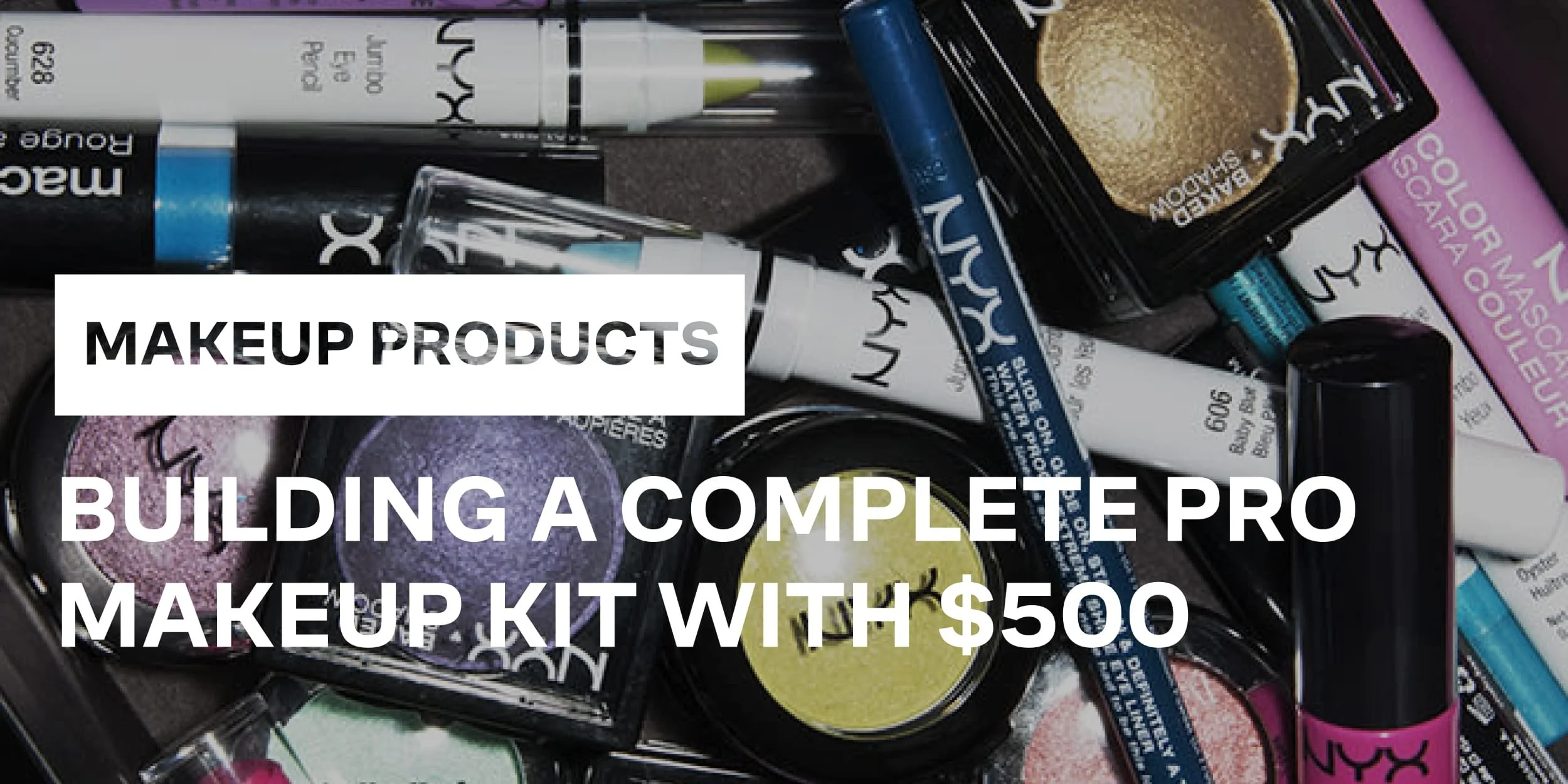
Your makeup kit is your livelihood. It's what you show up with on a bride's wedding morning, on a commercial set, at an editorial shoot, and what clients, photographers, and art directors silently evaluate before you've applied a single product. A well-built professional makeup artist kit signals preparation, professionalism, and range. A disorganized, incomplete, or low-quality kit signals the opposite.
But building a professional kit from scratch is genuinely overwhelming. The options are endless, the cost adds up fast, and the guidance available online is mostly generic. This guide cuts through that, covering exactly what goes in a working professional kit by category, how much to budget at each stage of your career, where to splurge versus save, and how your kit should evolve as you specialize.
In this guide, you'll learn:
The non-negotiable essentials every MUA kit needs regardless of specialization
Realistic budget ranges from starter kit to full working professional
Where to splurge and where to save without compromising client results
How bridal, editorial, and SFX kits differ, and what to add as you specialize
The sanitation setup that protects your clients and your professional reputation
Start With the Right Mindset: Your Kit Is a Living Investment
The first thing to understand about building a professional makeup artist kit is that it is never finished. Every working MUA will tell you the same thing: their kit looked completely different after year one than it did on day one, and completely different again after year three. Products get discontinued, techniques evolve, specializations narrow, and client needs change. Your kit is not a one-time purchase, it is an ongoing, career-long investment that grows and adapts with you.
That said, starting smart matters enormously. The most common mistake new MUAs make is either spending too much too fast, buying every shade, every formula, every tool before they know what they actually need, or spending too little and showing up to client appointments with products that don't perform. Both errors cost you more in the long run than a thoughtful, strategic initial investment would have.
The framework for building your kit well is simple: invest heavily where client results depend on it (foundation range, brushes, skin prep), spend moderately where quality is consistent across price points (eyeshadow palettes, setting powders, lip products), and never cut corners on sanitation, ever.
The Kit Case: Your Foundation Before the Foundation
Before you buy a single product, figure out how you're going to carry and organize everything. Your kit case is the infrastructure that determines whether you can work efficiently, and whether products arrive at jobs intact.
As a new MUA, avoid the temptation to start with a massive professional train case. A large case that's half-empty looks disorganized and is difficult to transport on public transit or carry through a venue. A mid-sized, well-organized case that's neatly packed is far more professional than a sprawling one that's chaotic. The most practical starter cases are rolling train cases or structured cosmetics cases with removable dividers, they give you flexibility to reorganize as your kit grows without buying a new case every six months.
Key criteria for your case: durable exterior (it will get knocked around), secure closures (nothing pops open in transit), enough interior compartments to keep categories separated, and a size that matches your primary transportation method. Driving to most bookings? You have more flexibility. Traveling by subway, rideshare, or plane? Prioritize compact and portable above all else.
Brands that working MUAs consistently recommend at different price points include ZUCA (professional-grade, pricey), Caboodles train cases (solid mid-range), and Relavel or Rownyeon (budget-friendly and surprisingly durable). A reliable starter case runs $40 to $120. This is not where you cut corners, a broken case that spills your kit before a shoot is a nightmare you only want to experience once.
Brushes: The Single Most Important Investment You'll Make
If there is one place in your entire kit where spending more money directly translates to better client results, it is your brushes. The quality of your brush set determines how your products apply, how efficiently you blend, how long your application takes, and how consistent your results are across different skin textures and types. Cheap brushes shed bristles, apply unevenly, and wear out within months. Quality brushes, properly maintained, last years.
A complete professional brush set covers five functional categories:
Face brushes: A flat foundation brush or kabuki for liquid and cream foundation application; a fluffy powder brush for setting and baking; a angled contour brush; a fan brush for precise highlight placement. These brushes handle your highest-volume work, they will be used on every single client.
Eye brushes: A large fluffy blending brush (your most essential eye brush, the MAC 217 or Sigma E35 equivalents are industry staples); a flat shader brush for packing color on the lid; a small tapered pencil brush for detailed liner and lower lash line work; a small smudge brush. Eye looks live or die by blending brush quality.
Contour and sculpt brushes: A tapered blush brush for cheek color; an angled kabuki for bronzer; a small tapered highlight brush for the nose bridge and cupid's bow.
Lip brush: A flat, firm synthetic lip brush for precise product application and sharp edges. Disposable lip applicators for sanitation in client settings.
Brow brush: An angled brow brush for product application; a spoolie for blending and grooming.
On materials: synthetic bristles are best for liquid and cream products, they don't absorb product, apply more evenly, and clean more easily. Natural bristles perform well with dry powder products and diffuse pigment beautifully. Most modern professional brush sets use a mix of both. Reputable mid-range brands that working MUAs trust include Sigma, Real Techniques (professional line), bdellium tools, and Morphe's artist-grade sets. Budget $80 to $200 for a complete starter brush set that will perform professionally, then add individual specialty brushes as your specialization narrows.
The Core Kit: Essential Products by Category
These are the products that belong in every professional makeup artist kit, regardless of specialization. Build this foundation first before adding anything specialization-specific.
Skin Prep and Primer
Great makeup starts with great skin prep. Your kit needs a gentle cleanser or micellar water to remove any existing makeup before application (Bioderma Sensibio H2O is the working MUA industry standard, deeply gentle, no-rinse, works on all skin types); a moisturizer suited to multiple skin types; and two to three primers covering different skin concerns: a smoothing/pore-minimizing primer for normal to oily skin, a hydrating primer for dry or mature skin, and a color-correcting primer (peach-toned to counteract dark circles and sallowness). Skin prep is where you invest confidently, the quality of your base determines everything that goes on top of it.
Foundation
Foundation range is the make-or-break category for a working MUA. Arriving at a job without a shade that matches your client is unprofessional and unfixable in the moment. Your starter foundation range should cover at minimum eight to ten shades spanning fair to deep, in at least two undertone categories (warm and cool/neutral). You don't need one shade for every client, you need a range you can mix. Three to four shades in the fair-to-light range, two to three in medium, and two to three in medium-deep to deep covers the majority of client requests. Add shades based on the specific market you're working in.
Formula matters as much as shade range. Carry at least two foundation formulas: a buildable medium-to-full-coverage formula for bridal and event work, and a lightweight natural-finish formula for editorial and commercial work where heavy coverage reads unnaturally on camera. A full-coverage concealer palette that spans light to deep rounds out your base toolkit and gives you color-correction capability for under-eyes, blemishes, and skin discoloration.
Setting Products
A translucent loose setting powder (works on all skin tones, RCMA No-Color Powder is a long-standing professional industry favorite), a skin-toned pressed powder for touch-ups, and a long-wear setting spray are all non-negotiable. These are your insurance policy, they determine whether your client's makeup lasts six hours or sixteen.
Eyes
Neutral eyeshadow palettes are the workhorse of your kit, a warm neutral palette and a cool neutral palette covers 80% of client requests. Add one palette with deeper jewel tones and one with high-impact shimmers for versatility. For liner: a reliable gel liner in black and dark brown, pencil liners in black and a nude/flesh tone, and a liquid liner for graphic looks and precision. Mascara is client-specific, most professional MUAs use disposable mascara wands and bring a clear mascara for grooming brows and setting lashes rather than applying mascara directly from the tube (a strict hygiene requirement in professional settings). False lashes in a range of styles from natural to dramatic are essential for bridal and event work.
Cheeks
A blush palette or selection covering three core tones, a warm peachy-coral for fair to medium warm skin, a dusty rose for cool undertones, and a deeper berry-plum for medium-deep to deep skin, covers the majority of client needs. A neutral matte bronzer for warmth and contouring (avoid orange-toned bronzers, which read unnatural on most skin tones), and highlight products in powder and cream formats give you flexibility across lighting conditions.
Lips
A lip liner palette or selection covering nudes, pinks, mauves, berries, and reds; a range of lip products from sheer gloss to full matte; and a clear gloss for layering. Disposable lip applicators for every client application, this is non-negotiable hygiene protocol, not optional.
The Sanitation Setup: Non-Negotiable, No Exceptions
Professional makeup artistry involves direct contact with clients' skin, eyes, and lips. Your sanitation setup is not a nice-to-have, it is a legal and ethical responsibility, and skipping it is the fastest way to damage your reputation irreparably.
Every professional kit must include:
Isopropyl alcohol (70% and 99%): 70% for sanitizing skin-contact surfaces; 99% for spraying directly onto product pans (palettes, powder products) to sanitize between clients without degrading the formula.
Disposable applicators in volume: Lip wands, mascara wands, eyeshadow sponge tips, foundation sponges, cotton swabs, and cotton rounds. Use one per client per product, no exceptions. Buy in bulk, you will go through more than you expect.
Brush cleaning solution: A fast-drying instant brush cleaner (Parian Spirit and Cinema Secrets are the professional standards) for between-client cleaning during a session, plus a gentle deep-cleaning shampoo for thorough washing after every use day.
Palette spatulas: Never apply product from a pan directly to a client's face. Scrape product onto a metal palette or your hand with a spatula, apply from there, and discard the excess after each client.
Paper towels and a clean work surface cover: Lay down a clean paper towel or disposable mat at every station before setting up your products. A clean workspace signals professionalism before you've touched a brush.
These items represent a small fraction of your total kit cost and protect both your clients and your career. Build sanitation into your kit setup ritual from day one so it becomes automatic, the habits you form as a student are the habits you carry into every professional setting.
Budget Reality: What to Expect at Each Stage
One of the most practical questions aspiring MUAs have about kit building is how much it actually costs. Here's an honest breakdown by career stage:
Starter Kit (Year 1): $400–$700
A functional professional kit that covers the essential categories, brushes, a foundational shade range, one or two reliable palettes, skin prep, sanitation setup, and a solid case, can be assembled for $400 to $700 with smart, strategic buying. This is not the kit you'll have in five years, but it is a kit you can show up to real client bookings with. At this stage: invest most in brushes and foundation range, choose mid-range palettes over expensive single shades, and use your pro card discounts wherever possible.
Working Professional Kit (Years 2–3): $1,000–$1,800
As your client base grows and your specialization becomes clearer, your kit expands accordingly. You'll replace brushes that wore out, add shades and formulas you discovered you needed on the job, and invest in more specialized tools. Most working MUAs report spending $400 to $600 per year on replenishment and additions once the foundation of the kit is established.
Established Specialist Kit (Year 3+): $2,000+
Established MUAs, particularly those specializing in bridal, film/TV, or SFX, carry kits valued at $2,000 to $5,000 or more. This builds over years, not months, and the investment is justified by the rates you can charge as a specialist with a proven track record. Getting here is a function of time, consistent client work, and knowing exactly what you need for the specific jobs you book.
How Your Kit Evolves by Specialization
The core kit described above serves every MUA, regardless of where their career goes. But each specialization adds distinct tools and products that the others don't require.
Bridal Kit Additions
Long-wear and waterproof formulas in every category, foundation, liner, mascara, setting spray, are essential for an industry where results must survive heat, humidity, tears, and a twelve-hour day. Airbrush equipment is increasingly requested by brides for its longevity and flawless-on-camera finish. A wider false lash range covering natural to full-glam. Emergency touch-up supplies packaged for the bride to take with her (blotting papers, travel setting spray, a lip liner, her lip shade).
Editorial and Commercial Kit Additions
Color, bold pigments, graphic liner shades, unconventional lip colors, becomes important here in ways bridal work rarely requires. A more extensive color palette range, editorial-grade pigments that photograph with intensity, and versatile tools that support creative and graphic looks rather than naturalistic ones. Color-correct and color-theory knowledge becomes especially important for print and digital work.
Film and TV Kit Additions
HD and camera-aware formulas throughout, matte finishes that don't reflect light, color-correct shades that account for how specific lighting setups read on camera. Anti-shine products, translucent setting powders, and touch-up essentials for continuity between takes. Knowledge of how makeup translates to screen rather than to the naked eye is a skill that develops over time on set.
SFX Kit Additions
Spirit gum and adhesive removers, prosthetic adhesives, latex, silicone, and character grade cream makeups designed for heavy coverage and long wear. Airbrushing equipment for seamless blending of prosthetic edges. Blood, bruise, and wound simulation products. SFX is the most technically complex specialization and the one that requires the most additional investment in specialized materials beyond a standard cosmetics kit.
Where to Buy Your Products as a Professional MUA
One of the most practical advantages of completing a certified makeup program is access to professional discount cards, known as pro cards, that unlock significant savings at industry suppliers. OMA graduates receive pro card eligibility at Frends Beauty and Nigel's Beauty Emporium upon certification, unlocking discounts of up to 40% on professional-grade products. At the volume a working MUA consumes foundation, setting powder, and disposables, those discounts translate into hundreds of dollars saved annually.
Key professional supplier categories to know:
Professional beauty supply: Frends Beauty, Nigel's Beauty Emporium, Alcone Company, professional-grade products at trade pricing with pro card
Brand direct: Make Up For Ever, NARS, MAC all offer professional accounts or artist programs with discount structures
Retail with pro discount: Sephora's Beauty Insider program, Ulta's pro program, useful for filling gaps quickly
Amazon professional: Disposables, sanitation supplies, and tools often available at significant savings when bought in professional quantities
Skip the Overwhelm: OMA's Pro Kit Is Already Curated for You
Every Online Makeup Academy program includes a professional makeup kit,curated by OMA's NYC-based instructors, built around the same products used in professional training, and shipped directly to you before you submit your first assignment. For students who want to skip the hours of research, trial, and error that comes with self-building a kit from scratch, this is one of the most practical advantages of structured professional training.
After graduation, your kit expands from that professional foundation. And with pro card eligibility at Frends Beauty and Nigel's Beauty Emporium, your post-graduation purchases are discounted from day one.
Ready to start with a professional kit already in hand? Explore OMA's programs and what's included →
Frequently Asked Questions
What should be in a beginner makeup artist kit?
A beginner professional kit should cover eight core categories: a kit case, a professional brush set, skin prep products (micellar water, moisturizer, primers), a foundation range of eight to ten shades, setting products (translucent powder and setting spray), a neutral eyeshadow palette, cheek products (blush, bronzer, highlight), lip products across a range of finishes, and a complete sanitation setup including disposable applicators and brush cleaning solution. This foundation kit can be built for $400 to $700 with strategic, quality-focused buying.
How much does a professional makeup artist kit cost?
A functional starter kit that a new MUA can take to real client bookings costs $400 to $700. A well-stocked working professional kit after two to three years in the industry typically represents a cumulative investment of $1,000 to $1,800. Specialist kits, particularly bridal with airbrush equipment or SFX with prosthetic materials, can exceed $3,000 to $5,000 for a fully established professional setup. The key distinction is that these figures accumulate over a career, not in a single purchase.
What brushes do makeup artists need in their professional kit?
The essential brush categories for a professional kit are face brushes (flat foundation, powder, contour, fan), eye brushes (large fluffy blending brush, flat shader, small tapered pencil brush, smudge brush), cheek brushes (angled blush and bronzer), a firm lip brush, and a brow brush with spoolie. Invest in quality synthetic brushes for liquid and cream products and natural or mixed-bristle brushes for powder applications. A reliable mid-range brush set covering all categories runs $80 to $200 and should last years with proper maintenance.
Where do professional makeup artists buy their products?
Working professionals buy primarily through professional beauty supply distributors, Frends Beauty, Nigel's Beauty Emporium, and Alcone Company are among the most widely used in the U.S., using professional discount cards that provide 20% to 40% savings on retail pricing. OMA graduates receive pro card eligibility at Frends Beauty and Nigel's upon certification. Brand-direct artist programs (Make Up For Ever, MAC, NARS) offer additional discount structures for certified professionals. Sanitation supplies and disposables are most economically purchased in bulk from Amazon or professional supply companies.
Do I need to buy a kit before starting a makeup program?
If you enroll in a program that includes a professional kit, as all Online Makeup Academy programs do, no. Your kit ships before your first assignment and is curated specifically for the techniques you'll be learning. If you're self-teaching or enrolling in a program that doesn't provide a kit, building your own becomes necessary from the start. Starting with a school-provided kit has a significant practical advantage: you know the products, you've trained with them, and you understand exactly how they perform before you start adding to the kit independently.
The Bottom Line
Building a professional makeup artist kit is not a single moment, it is one of the longest-running projects of your career. Start with the essentials, invest deliberately where client results depend on quality, never cut corners on sanitation, and let your specialization guide what you add over time. The artists who build the strongest kits are not the ones who spent the most on day one, they are the ones who spent strategically, learned from every client appointment, and kept refining their setup based on real professional experience. Your kit, like your craft, is always in progress.
If you're just starting out and want a curated professional kit from day one, learn how OMA's programs work, and what's included when you enroll.
About the Author: This article was produced by the editorial team at Online Makeup Academy, a professional beauty education institution based in New York City. OMA offers six accredited programs in makeup artistry with personalized instructor feedback, pro kits, and self-paced learning for students worldwide. | Last updated: April 2026