
How to Become a Bridal Makeup Artist: Full Career Guide

To become a bridal makeup artist, you need three things: strong makeup skills built specifically for weddings, a portfolio that proves it, and a simple business system for pricing, contracts, and booking brides. You do not need a four-year degree, and in most cases you can start assisting on real weddings within a few months of focused training.
Bridal is one of the most reliable niches in the entire beauty industry. With roughly two million weddings in the United States every year, demand never really stops, and a single booked Saturday can be worth more than a full week behind a retail counter. This guide walks you through exactly how to get there, from the skills that separate bridal work from everyday makeup to the pricing and deposit structure that keeps your calendar (and your bank account) protected.
In this guide, you'll learn:
What a bridal makeup artist actually does, and how the work differs from general makeup
The specific skills, training, and licensing you need to get started
A step-by-step path to your first paid weddings, even with zero experience
What bridal artists really charge, and the deposit and contract structure that protects you
What Does a Bridal Makeup Artist Do?
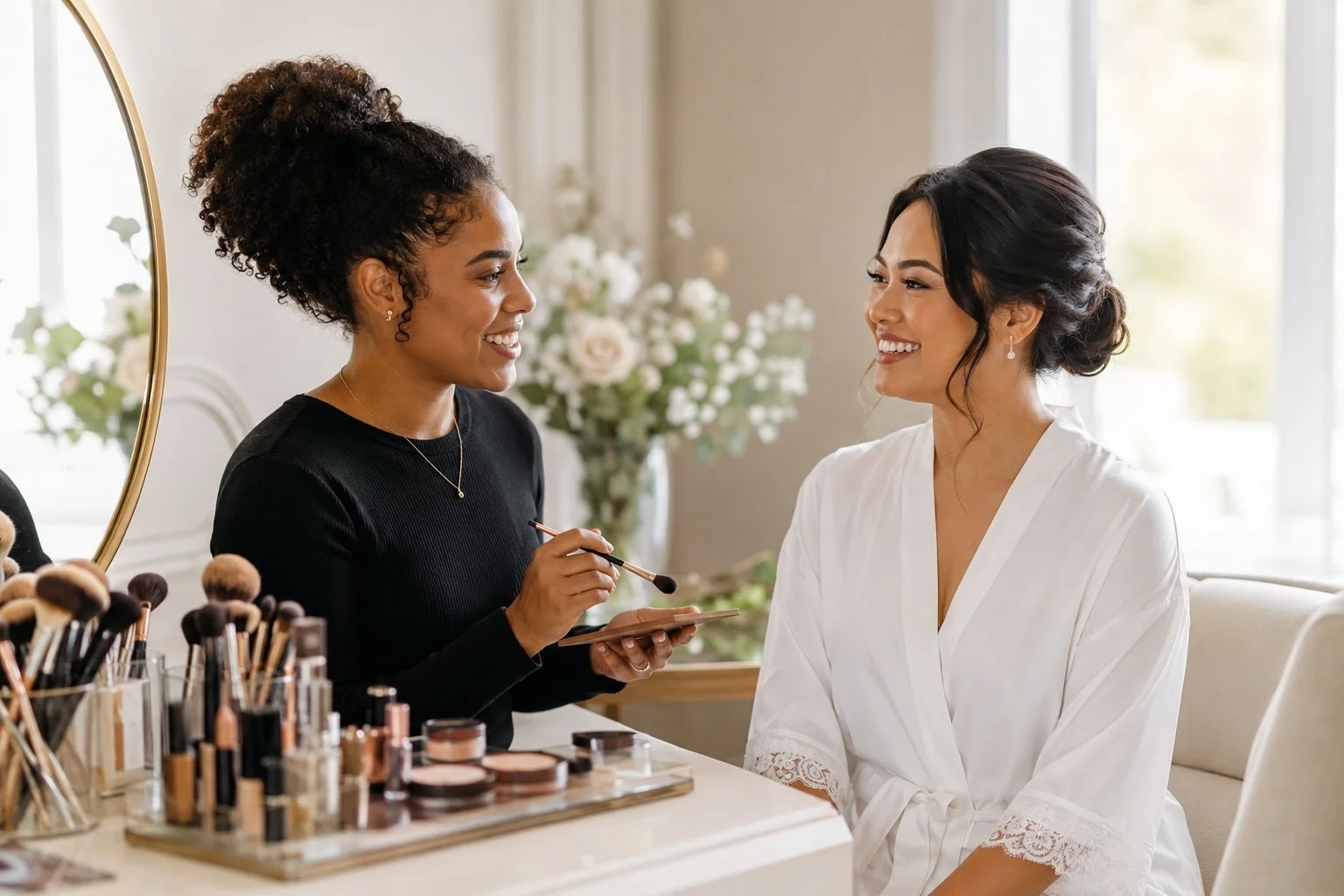
A bridal makeup artist is a professional who designs and applies wedding-day makeup for the bride and, increasingly, her entire bridal party. The core job is to create a look that flatters the bride in person, photographs beautifully, and survives an eighteen-hour day of hugs, happy tears, heat, and dancing. That durability requirement is what sets bridal apart from almost every other kind of makeup.
Where an everyday or retail makeup application is over in twenty minutes and forgotten by dinner, bridal work lives forever in photographs and video. That raises the stakes on three specific things: long-wear formulas (products engineered to resist sweat, oil, and tears), photography-friendly finishes (avoiding flashback, the white cast that certain sunscreens and silica powders throw under a camera flash), and true-to-skin color matching so the bride looks like the most polished version of herself, not a different person.
Bridal is a service business, not just an art form
The other half of the role is client management. You are meeting nervous brides months in advance, running a trial to lock in the look, coordinating a wedding-morning timeline down to the minute, and often directing an assistant or a second artist for larger parties. The artists who thrive treat bridal as a premium service business. The makeup is the deliverable, but the calm, the communication, and the reliability are what earn the referral.
What Skills and Training Do You Need to Become a Bridal Makeup Artist?
You need to master general makeup fundamentals first, then layer bridal-specific techniques on top. There is no shortcut around the fundamentals: color theory, foundation matching across every skin tone and undertone (the subtle warm, cool, or neutral hue beneath the surface of the skin), corrective and color-correcting application, seamless blending, and clean lash application.
On top of that base, bridal demands a specialized skill set:
Long-wear construction. Layering primer, long-wear or waterproof foundation, cream products under powder, and setting spray so the look holds for twelve hours or more. Photography readiness. Understanding how flash, natural light, and video read on skin, and how to build dimension with contour and highlight that looks natural to the eye and to the lens. Speed under pressure. A confident bridal artist completes a flawless application in sixty to ninety minutes, then repeats it for the bridal party on a tight schedule. People skills. Reading a client, asking the right questions, and staying composed when emotions run high on the morning of a wedding.
You can build these through a structured program. A focused course compresses years of trial and error into a curriculum, and a bridal-specific track (like our Bridal Makeup and Hair course) teaches the durability and photography techniques that general classes skip. If you are still deciding on a path, our guide on how to become a makeup artist lays out the broader options before you specialize.
Do You Need a License to Do Bridal Makeup?
It depends on where you work. There is no single national requirement, and rules vary significantly by state and country. Some regions require a cosmetology or esthetics license to apply makeup for pay, which can mean hundreds of supervised training hours, while others have no makeup-specific licensing at all. Your first move is to confirm the rules with your local licensing board before you take a paying client.
Because this varies so much, we keep a plain-English breakdown current on our makeup artist licensing page. Check your specific state or region there so you start on the right side of the law.
Certification is a separate question from licensing. There is no mandatory, universally recognized certification specifically for bridal makeup. What matters far more to a bride than any certificate is a strong portfolio, real reviews, and a professional presentation. That said, completing an accredited program signals commitment and gives you the structured training that shortens your learning curve, which is exactly why formal education still pays off.

How Do You Become a Bridal Makeup Artist With No Experience?
Start by building skill and proof at the same time, then add the business layer once you are ready to charge. Here is the practical order of operations that takes you from beginner to booked.
Master the fundamentals. Get comfortable with foundation matching, color correction, blending, and lashes on a wide range of skin tones and face shapes. This is non-negotiable groundwork before anything bridal.
Get bridal-specific training. Take a course that teaches long-wear and photography-ready application, not just pretty looks. Structured training saves you from learning durability the hard way, on a real bride's wedding morning.
Build a professional kit. Invest in camera-ready, long-wear products across a full shade range. Kits typically run $500 to $2,000 or more as you grow. Many professional brands offer student and pro discounts, so take advantage of pro discount cards to stretch your early budget.
Assist an established bridal artist. This is the single fastest way to learn the wedding-day flow. Shadowing a seasoned pro teaches you timing, party logistics, and how to troubleshoot under pressure, none of which a classroom can fully replicate.
Build your portfolio. Do makeup for friends and family weddings, organize styled shoots, and collaborate with newer wedding photographers to trade services for professional images. Photograph every look. Your portfolio is what converts a browsing bride into a booking.
Set up the business side. Decide your packages and prices, create a simple contract, require a deposit to hold a date, and get liability insurance. This is where a hobby becomes a real business.
Get found by brides. List yourself where brides search (WeddingWire, The Knot, Google, local wedding Facebook groups), build an Instagram portfolio, and network with photographers, planners, and hairstylists who refer work. Word of mouth, referrals, and organic search almost always beat paid ads for bridal.
How Much Do Bridal Makeup Artists Charge?
Bridal makeup pricing varies more than almost any other beauty service, driven by your experience, your market, the season, and the size of the party. As a working benchmark, a bride's makeup nationally tends to run from roughly $450 to $750, with major metro markets like New York and Los Angeles reaching $700 to $1,500 or higher, and talented newcomers often starting closer to $250 to $400. The bride's service costs more than a bridesmaid's because it involves custom shade matching and premium long-wear products.
The real money is in packages and add-ons, not single faces. Each additional person in the bridal party typically adds $100 to $200. A trial session usually runs $150 to $300. An airbrush upgrade (a fine, mist-applied foundation known for a lightweight, long-lasting finish) commonly adds $75 to $150. Travel beyond a set radius, early-morning start times, and peak Saturday dates in the May-to-October wedding season all justify premiums. Learning to build packages, rather than quoting one number, is what turns a booked wedding into a genuinely profitable one.
Protect every booking with a deposit and a contract
Never hold a wedding date on a promise. The industry standard is a non-refundable deposit, often around fifty percent of the total, paired with a signed contract that locks in the date, the services, and the terms. A trial date alone does not reserve the wedding day. This one habit protects you from last-minute cancellations on dates you could have booked for someone else, and it is a lesson many artists learn only after getting burned.
The bridal trial is where you earn the booking and prevent wedding-day surprises. Use it to align on the look and to gather the details that shape it: what the dress looks like, how the bride is wearing her hair, the time of day and lighting of the ceremony and photos, the color palette of the flowers and bridesmaids' dresses, and the bride's everyday comfort level with makeup. Assess and prep her skin, and give her a skincare and facial timeline for the weeks before the wedding. Skin preparation is the single most important factor in how makeup photographs and lasts, so treat it as part of the service, not an afterthought.
What Mistakes Should New Bridal Makeup Artists Avoid?
Most early stumbles are business mistakes, not makeup mistakes. The application skills come with practice. The costly errors happen around pricing, boundaries, and process. Watch for these:
Underpricing out of fear: Charging too little because you are afraid of not being hired trains the wrong clients and undervalues your work. Price for the quality you deliver and raise your rates as you book out.
Taking too small a deposit: A low or refundable deposit leaves you exposed. Require a proper non-refundable deposit and a signed contract so a cancellation does not cost you a whole date.
Skipping the trial or the consultation questions: Guessing at the bride's vision is how you end up with a disappointed client on the highest-stakes morning of her year. Run the trial and ask the questions.
Neglecting skin prep: Makeup can only look as good as the skin under it. Ignoring prep is the fastest way to a look that photographs poorly and fades by the reception.
Building in too little time: Underestimating the wedding-morning timeline means running late when you absolutely cannot. Pad your schedule and confirm the order of the party in advance.
Pouring money into paid ads too early: Advertising that does not convert drains a young business. Referrals, organic search, and a strong social portfolio deliver a far better return for most bridal artists.
Taking feedback personally: Bridal makeup is deeply personal to the client, but their notes are about the look, not about you. Stay professional, listen, and adjust. Never let a difficult moment rattle your composure.
How Online Makeup Academy Can Help You Become a Bridal Makeup Artist
If you are serious about building a bridal career, structured training is the fastest way to shorten the gap between where you are and your first booked wedding. Our Bridal Makeup and Hair course teaches the long-wear, photography-ready techniques that weddings demand, alongside the hair skills that let you offer complete packages and earn more per booking. If you want a full professional foundation before you specialize, the Master Makeup program covers the fundamentals every bridal artist needs, and the Elite Career Path program goes deeper on building a real business.
Everything is online and self-paced, so you can train around your current job and start assisting on weekends while you learn. Flexible payment plans make it realistic to begin now rather than someday. Explore our programs and take the first step toward a booked wedding calendar.
Frequently Asked Questions About Becoming a Bridal Makeup Artist
How long does it take to become a bridal makeup artist?
Focused training programs often run from a few weeks to a few months, and you can begin assisting on real weddings soon after. Building genuine speed and a strong portfolio usually takes another several months of consistent practice. There is no fixed timeline, because bridal is a skill you keep refining, but a dedicated beginner can realistically take first paid clients within a year.
Do you need to be licensed to do wedding makeup?
It varies by location. Some states and countries require a cosmetology or esthetics license to apply makeup for pay, while others have no makeup-specific requirement. Always confirm the rules with your local licensing board before charging clients, and check our licensing page for a state-by-state overview.
How much can a bridal makeup artist make?
Earnings scale with your market, experience, and volume. A single bride's service commonly ranges from a few hundred dollars to well over a thousand in major metros, and packages that include the bridal party, trials, and add-ons increase the total significantly. Because weddings cluster on weekends in peak season, many artists build strong income around a Friday-to-Sunday schedule, and some scale further by leading a team of artists.
Is bridal makeup a good career?
Yes, for the right person. Demand is steady thanks to roughly two million weddings a year in the United States, the schedule is weekend-friendly (which makes it a viable side hustle before going full-time), and the work is creative and rewarding. It also comes with real pressure and high expectations, so it suits artists who stay calm and communicate well.
What should be in a bridal makeup kit?
A professional bridal kit centers on long-wear foundations across a full range of shades and undertones, color correctors, primers, setting powder and spray, quality lashes, and strict sanitation supplies. Camera-ready, professional-grade products matter here because they resist wear and photograph cleanly. Invest gradually, and use pro discount programs to build a professional kit without overspending early.
The Bottom Line
Learning how to become a bridal makeup artist comes down to combining wedding-ready technical skill with a simple, protected business: train specifically for durability and photography, build a portfolio that proves it, price for your value, and lock every date with a deposit and a contract. Master those pieces and you can build a career on one of the most dependable niches in beauty.
Ready to take your makeup skills to the next level? Explore Online Makeup Academy's programs →
About the Author: Nina Mua is the Founder of Online Makeup Academy, a professional makeup artist and beauty educator who has helped thousands of students worldwide launch careers in makeup artistry. She specializes in translating real-world professional standards into training that helps new artists get booked. | Last updated: July 2026