
Types of Makeup Artists: Which Career Path Fits You? (2026)
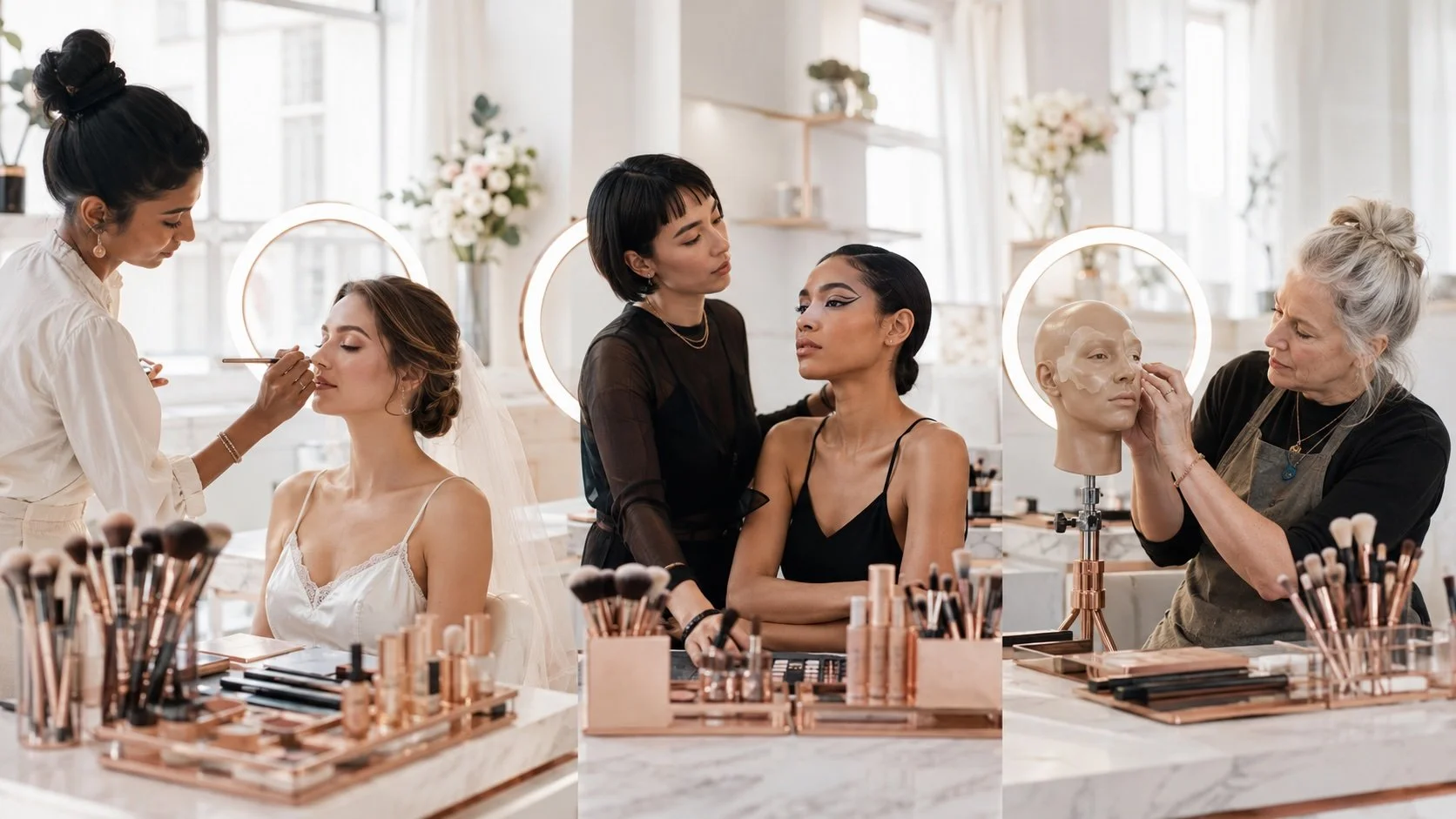
There are nine main types of makeup artists working today: bridal, editorial and fashion, film and television, special effects, retail and brand, salon and spa, freelance business owners, educators and content creators, and clinical or permanent makeup specialists. Each path uses the same core skills to build a completely different working life, and choosing between them is the biggest decision you will make after deciding to become an artist at all.
The good news: you do not have to guess. Every specialization has a recognizable daily rhythm, a typical entry route, and an earning pattern you can compare before investing years in one direction. This guide breaks down all nine paths so you can match a lane to your temperament, market, and goals instead of drifting into whatever work shows up first.
In this guide, you'll learn:
The nine main makeup artist career paths and what each one is really like day to day
Typical entry routes, from counter jobs to set assisting to bridal trials
How pay differs across specializations, and where the highest earners work
A step-by-step framework for choosing your niche with confidence
What Are the Main Types of Makeup Artists?
Makeup artists specialize by industry, not just by technique. A bridal artist and a film artist might both execute a flawless soft glam, but one works a hotel suite at 6 a.m. for a nervous bride, the other a set trailer under continuity notes. Most professionals eventually blend two or three income streams, but nearly everyone builds a name by leading with one. Here are the nine paths, with the honest version of each.
1. Bridal and Special Occasion Makeup Artist
Bridal artists create long-wear, photograph-ready looks for weddings, engagement shoots, proms, and galas. The craft centers on skin prep, tear-proof and humidity-proof application, airbrush and traditional long-wear techniques, and trials held weeks ahead. The client experience is half the job: you are often the calmest person in the room on an emotional morning.
The typical entry route: assist an established bridal artist through a wedding season, practice on models of every skin tone and age, then book your own trials. Artists who thrive here love people, repeatable process, and referral-driven business. Demand is the steadiest in the industry, in every market, every weekend.
2. Editorial and Fashion Makeup Artist
Editorial artists work magazine shoots, brand campaigns, lookbooks, and runways, translating a creative director's concept into bold, camera-first looks. Speed matters backstage, trend fluency matters everywhere, and your work serves a team's vision rather than a client's preference.
You break in through test shoots (unpaid collaborations where photographer, model, and artist all build portfolios), then fashion week assisting, and eventually agency representation. This path rewards concept-driven artists who take direction well and tolerate irregular schedules, and it concentrates in fashion markets like New York and Los Angeles.
3. Film and Television Makeup Artist
Film and TV artists handle both natural, camera-ready beauty and full character work, with continuity as the discipline that separates professionals from hobbyists: the look you build on Tuesday must match the one you rebuild on Friday. Days are long, sets run on hierarchy, and 4K cameras forgive nothing.
Entry starts with student films, local commercials, and day-player work while you learn set etiquette. The long-term prize is membership in IATSE (the International Alliance of Theatrical Stage Employees; Local 798 covers hair and makeup on the East Coast), which brings the field's most stable high pay.
4. Special Effects (SFX) and Theater Makeup Artist
SFX artists build transformations: prosthetics, wounds, aging, creatures, and bald caps, using materials like silicone, encapsulated transfers, and foam latex. Theater adds its own skills: looks that read from the back row and quick changes between scenes.
Entry runs through SFX-specific training, then haunted attractions, regional theater, cosplay collaborations, and short films that build a transformation portfolio. This is the lane for makers: artists who love sculpting, materials, and technical problem-solving under deadline.
5. Retail and Brand Makeup Artist
Retail artists work counters and store floors for brands like MAC, Charlotte Tilbury, Sephora, and Ulta Beauty: consultations, quick applications, masterclass events, and yes, sales targets. Pay is hourly plus commission, often sweetened with gratis (free product allowances from the brand).
It is the industry's most accessible first job, and plenty of celebrity artists started behind a counter. You get paid to practice on hundreds of real faces across every skin tone and age, building speed and product knowledge faster than any classroom can.
6. Salon and Spa Makeup Artist
Salon artists provide makeup inside a hair and skin business: event clients, makeovers, lessons, and bridal parties who book the whole morning. The environment offers a home base, walk-in traffic, a team, and more predictable hours than freelance life.
The catch most beginners discover too late: salons usually hire under cosmetology or esthetics licenses because the facility is regulated, yet those programs spend hundreds of hours on hair or skin and barely touch makeup. We unpack that catch-22 in the licensing section below.
7. Freelance Makeup Artist and Studio Owner
Freelancers build their own roster across weddings, events, and shoots, setting their rates and owning everything that comes with that: marketing, taxes, kit costs, contracts, scheduling. Early on it is feast and famine; later it compounds, because every happy client markets for you.
Freelancing is usually the second step after any path above, once a portfolio and referral base exist. If you are wired for the business side as much as the brush work, our guide on how to start a makeup business maps the whole build, from pricing to marketing.
8. Makeup Educator and Content Creator
Educators teach in schools, run workshops, or train for brands, while creators build audiences on TikTok, Instagram, and YouTube, earning through partnerships, affiliate revenue, and their own classes. The two overlap more every year: the artist who can teach a technique on camera is valuable to schools and brands alike.
This path grows out of demonstrated expertise in another lane, so document your work from day one even if teaching feels years away. It suits communicators who can break a technique into steps a beginner can follow.
9. Clinical and Permanent Makeup Artist
Clinical artists work in paramedical settings, using camouflage techniques for scars, burns, and vitiligo and helping clients rebuild confidence during and after medical treatment. Permanent makeup (microbladed brows, lip blush, eyeliner tattooing) is a related lane, regulated as tattooing in most states and requiring its own licensing plus bloodborne pathogen certification.
Entry requires specialized certification on top of core artistry training. Detail-driven artists drawn to one-on-one service and precision work often find this the most meaningful lane in the industry.

Which Makeup Artist Career Path Pays the Most?
Union film and television work sits at the top for stable earnings, with union artists reporting median income near six figures, while celebrity and top editorial artists command high day rates that arrive less predictably. Bridal offers the most reliable route to strong self-employed income: established artists commonly charge $150 to $500 or more per application, and a peak-season Saturday can stack several applications into one morning. SFX work earns strong day rates for technical skill, while retail and salon roles anchor the entry level with hourly pay plus commission.
The pattern: pay follows specialization, market, and reputation, not years served. A specialist in the right market out-earns a generalist with twice the experience. For current numbers on every path, including what beginners realistically earn in years one and two, see our makeup artist salary guide.
How Do You Choose Your Makeup Specialization?
Choose your specialization by matching three things: your temperament, your local market, and the training route you can access. Here is the process we teach:
Audit what you enjoy repeating. Careers are built on repetition. If you love people and occasions, bridal will energize you. If you love concepts and collaboration, editorial will. If you love building and transforming, SFX will. Notice which practice sessions you lose track of time in, because that is data.
Research your local market honestly. Weddings happen everywhere, so bridal travels with you. Film, fashion, and theater concentrate in production and fashion hubs. Search job boards and local artist listings for your city before committing to a path your market cannot feed.
Test two paths cheaply before choosing one. Book practice models for a bridal-style trial and an editorial-style concept shoot. Ask one working artist in each lane for a single assisting day. Two weekends of testing beats two years of drifting.
Map the training requirement. Every path starts with core artistry: color theory, skin prep, application across all skin tones. Specializations add their own layer, from airbrush to prosthetics. Compare how our online makeup courses map to the lane you are testing.
Commit to one lead specialization for 12 months. Pick the strongest fit and give it a full year of focused portfolio building, pricing, and outreach. You can always add a second lane later; you cannot build a reputation in six lanes at once.
Build a portfolio that announces your lane. A specialized portfolio of 15 strong bridal looks books more weddings than a scattered portfolio of 50 mixed images. Curate ruthlessly toward the clients you want next, not the practice you did last.
Notice what is not on this list: waiting until you feel certain. Certainty comes from testing and committing, not from more research.
Do You Need a License for Every Makeup Career Path?
For most paths, no. Makeup artistry itself is unlicensed in the majority of US states, so bridal, editorial, film, SFX, retail, and freelance work generally require skill and a portfolio rather than a state license. The exceptions cluster in two places.
First, salons and spas: because the facility is regulated, they typically hire under cosmetology or esthetics licenses, the industry's strangest catch-22, since those programs require hundreds of classroom hours that barely address makeup. Second, permanent makeup: microblading and cosmetic tattooing are regulated as tattooing nearly everywhere, with specific licensing and bloodborne pathogen requirements. Rules vary by state, so always confirm with your state board. Our state-by-state guide on whether you need a license to be a makeup artist breaks down every state in plain language.
What Is the Best Makeup Career Path for Beginners?
Retail artistry, salon assisting, and bridal assisting are the three most reliable on-ramps, because all three pay you to practice. A counter job puts hundreds of real faces in your chair in your first year. Bridal assisting teaches timing, kit hygiene, and client care under a mentor's eye. Salons add speed and the rhythm of a fully booked day.
From those on-ramps, artists branch naturally: retail leads toward brand and editorial work, bridal assisting leads to your own wedding book, and student films or community theater lead toward film and SFX. Whichever on-ramp you choose, our playbook on where to find makeup artist jobs lists the platforms, programs, and outreach scripts that land those first positions.
Common Mistakes When Choosing a Makeup Career Path
We see the same wrong turns derail talented beginners every year. Avoid these:
Chasing the highest-paying path instead of the best-fitting one. Film pays well, but if long unpredictable days on set drain you, you will burn out before the union card arrives. Fit compounds; misfit erodes.
Staying a generalist too long. "I do everything" reads as "I specialize in nothing" to clients and bookers. Generalists get price-shopped; specialists get sought out.
Picking a niche your market cannot feed. Editorial ambitions in a city with no fashion industry mean relocating or reframing. Match the lane to a market you can reach, or plan the move deliberately.
Ignoring the business skills the freelance path demands. Pricing, contracts, taxes, and marketing are half the job of self-employment. Treat them as skills to learn, not chores to dodge.
Assuming a cosmetology license is required, or that it teaches makeup. Both assumptions cost beginners years and thousands of dollars. Check what your target path requires before enrolling in anything.
Waiting to specialize until you feel "ready." Readiness follows commitment. Pick your lead lane, give it 12 focused months, and let the portfolio make you ready.
Train for the Path You Choose at Online Makeup Academy
Whichever lane fits you, the sequence is the same: master the fundamentals, then specialize with intention. Our Master Makeup Artistry course builds the foundation every path shares, from color theory to application across all skin tones, while our Advanced Makeup course takes editorial-focused artists deeper into camera-ready technique. Every program is self-paced, includes a professional kit, and comes with one-on-one instructor feedback, so you can test your lane with real guidance. Compare all programs and tuition to find your starting point.

Frequently Asked Questions
Can you switch makeup specializations later in your career?
Yes, and most successful artists do. Core skills transfer across lanes, so a pivot is mostly a portfolio project: three to six months of targeted shoots or assisting is usually enough to start booking. Many artists permanently run two complementary lanes, like bridal plus education.
Do makeup artists need a college degree?
No. The industry hires on portfolio, skill, and professionalism, not degrees. Structured training and certification accelerate the path, compressing years of trial and error into months and giving clients a reason to trust a new artist, but no makeup career path requires a university education.
How long does it take to specialize as a makeup artist?
Plan on three to six months of focused training to build core artistry, then six to twelve months of portfolio building in your chosen lane. Most artists book consistent paid work in their specialization within their second year, faster in bridal and retail, slower in union film work.
Is it better to freelance right away or get a makeup job first?
For most beginners, employed or assisting work comes first: it pays you to build speed, product knowledge, and a portfolio, and introduces the mentors and clients who seed a freelance book later. Freelancing works best as a second step, launched from proof rather than hope.
What type of makeup artist is most in demand in 2026?
Bridal and special occasion demand stays steadiest in every market, since weddings never stop. Beyond that, artists who can create content while they work are increasingly valuable to brands and salons, and film and TV work has rebounded with streaming, though it stays concentrated in production hubs.
The Bottom Line
There are nine main types of makeup artists: bridal, editorial, film and television, SFX and theater, retail and brand, salon and spa, freelance business owners, educators and creators, and clinical or permanent makeup specialists. All nine share the same foundation and lead to very different lives, so choose by matching your temperament, your local market, and your training route rather than chasing pay alone. Start on an accessible on-ramp like retail or assisting, commit to one lead specialization for a full year, and build a portfolio so focused it announces your lane before you say a word.
By Nina Mua, Founder of Online Makeup Academy. Nina has spent more than two decades as a professional makeup artist and educator in New York City, training thousands of students who now work across bridal, editorial, film, and SFX around the world. Last updated: July 2026.